Guest Editors
Xueqiang Peng
The Fourth Affiliated Hospital, China Medical University
<p>Dr. Xueqiang Peng is an associate professor and an associate research fellow at The Fourth Affiliated Hospital, China Medical University. His research focuses on harnessing cutting-edge techniques in subcellular compartmentalization, vesicle analysis, and organoid models to illuminate the molecular mechanisms behind tumor stress homeostasis and immune evasion. Additionally, Dr. Peng is dedicated to exploring and validating innovative anticancer therapies, paving the way for breakthroughs in cancer treatment. </p>
Shaoqin Zheng
Yong Loo Lin School of Medicine, National University of Singapore
<p>Dr. Shaoqin Zheng is a postdoctoral fellow at the Yong Loo Lin School of Medicine, National University of Singapore. His research focuses on organoid culture and stem cell biology, the molecular mechanisms underlying tumor initiation and progression, cancer-targeted therapies, and cholesterol and lipid metabolism. Dr. Zheng employs diverse organoid models to dissect the molecular mechanisms of tumorigenesis and to screen and functionally characterize novel anticancer agents.</p>
Guolong Zeng
The First Affiliated Hospital, Anhui Medical University
<p>Guolong Zeng is a doctoral researcher in the General Surgery Department of the First Affiliated Hospital, Anhui Medical University. His research mainly investigates tumor progression using organoid models, such as in vitro simulation of the tumor microenvironment and precision treatment. Additionally, he is committed to advancing efficient in vitro cultures of various tumor organoids and exploring their translational applications in cancer treatment.</p>
Collection Overview
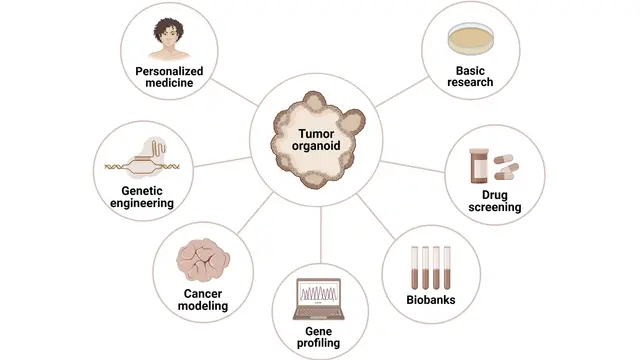
Organoids are advanced biological models that self-organize and renew in a three-dimensional in vitro environment. They are primarily derived from induced pluripotent stem cells or tissue-specific cells, encompassing a range of cell types, including normal stem cells, differentiated cells, and cancer cells. Compared to traditional two-dimensional cell lines and animal models, tumor organoids closely mimic the spatial structure, cellular diversity, genetic makeup, and biological functions of primary tumor tissue, making them invaluable for studying tumor mechanisms, tumor microenvironment interactions, and screening new anticancer drugs.
The integration of cutting-edge technologies such as multi-omics analysis, advanced imaging, and gene editing is expanding the use of tumor organoids for molecular disease typing, individualized drug sensitivity testing, and investigating tumor progression. This collection of methods highlights the significant potential of tumor organoids in cancer research and their critical role in advancing precision medicine.
Key areas of focus include:
- Constructing functional organoid models and simulating tumor microenvironments using innovative techniques
- Integrating multidimensional data layers (e.g., genomics, morphology) to explore complex regulatory networks involved in organoid development
- Developing advanced imaging and data analysis methods in collaboration with artificial intelligence to improve accuracy and efficiency
- Utilizing gene editing technologies to investigate tumor development
- Screening drug sensitivity using organoids to advance precision therapy
Articles
Generation and Single-Cell Transcriptomic Analysis of Hepatocellular Carcinoma Organoids following Drug Treatment
0 Views
•
2026
•
Dan He*1, Zhong Liang*1,2,3, Cheng-Yang Zhang*1,2,3, Jie-Shen Xian*4, Yuan-Xiang Yang5, Yuan-Feng Gong3, Hui Tang3, Guang-Ding Zhou1,2,3, Chen-Yu Jiang1,2,3, Le Xing1,2,3, Dong-Mei Li1,2,3, Ying-Chen Hou1,2,3, Chen Yue1,2,3, Wei Cheng1,2, Yun-Qiang Tang3, Ming Liu1,2,3, Xiao-Feng Zhang1,2,3,6
1School of Basic Medical Science, Guangzhou Medical University, 2Guangzhou Municipal and Guangdong Provincial Key Laboratory of Protein Modification and Degradation, Guangzhou Medical University, 3Affiliated Cancer Hospital and Institute, Guangzhou Medical University, 4The First Clinical School of Guangzhou Medical University, Guangzhou Medical University, 5Department of Obstetrics, Guangzhou Eighth People's Hospital, Guangzhou Medical University, 6Department of Pediatric Surgery, Guangzhou Institute of Pediatrics, Guangzhou Women and Children's Medical Center, Guangzhou Medical University
Abstracts
An integrated workflow for quantitative drug screening and single-cell CRISPR–Cas9 lineage–transcriptome analysis in HCC patient-derived organoids
Ming Liu*1,
Xiao-Feng Zhang*1
1Guangzhou Medical University