This protocol details a multidisciplinary perioperative care pathway for lung cancer surgery, integrating prehabilitation, lung-protective strategies, and structured rehabilitation to reduce complications, enhance the quality of acute recovery, and significantly improve 90-day survival.
Artykuł metodologiczny
A Perioperative Multidisciplinary Management Protocol for Patients Undergoing Lung Cancer Resection: Implementation and Outcomes Analysis
Otwiera się w nowej karcie
W tym artykule
Podsumowanie
Loading...
$$\rightleftharpoonup{xx}$$
$$\longleftharp{xx}$$,
$$\longrightharp{xx}$$,
Streszczenie
Loading...
$$\rightleftharpoonup{xx}$$
$$\longleftharp{xx}$$,
$$\longrightharp{xx}$$,
Effective perioperative care is critical for optimizing outcomes after lung cancer surgery. This protocol details the implementation of a structured, multidisciplinary perioperative management bundle designed to enhance recovery and reduce complications. The protocol encompasses three phases: preoperative (including risk assessment, pulmonary rehabilitation, psychological support, and nutritional optimization), intraoperative (featuring lung-protective ventilation strategies), and postoperative (emphasizing early mobilization, multimodal analgesia, and continuous multidisciplinary team coordination). To assess the feasibility and potential impact of this protocol, it was applied to a cohort of patients undergoing lung cancer resection. Clinical outcomes, including postoperative complications, length of hospital stay, perioperative recovery quality, and short-term survival, were analyzed and compared with those receiving conventional perioperative care. The results indicated that high adherence to this comprehensive protocol was associated with a significant reduction in overall postoperative complications (10.0% vs. 29.1%, P < 0.001) and postoperative pneumonia (3.3% vs. 11.0%, P = 0.022). Although the hospital length of stay was statistically comparable between the groups (7.16 ± 3.32 days vs. 7.02 ± 3.66 days, P = 0.731), the comprehensive protocol group demonstrated vastly superior recovery efficiency, characterized by a substantial reduction in maximal acute pain scores (3.47 ± 1.01 vs. 5.17 ± 1.45, P < 0.001) and a major increase in patient satisfaction (91.82 ± 3.67 vs. 83.06 ± 6.13, P < 0.001) without compromising 30-day readmission safety. Most importantly, the protocol served as an independent protective factor that markedly improved 90-day survival (10.0% mortality vs. 29.9% in the conventional care group, P < 0.001). This article provides a step-by-step guide for implementing this multidisciplinary management protocol, supported by rigorously audited clinical outcome data, serving as a practical operational framework for other institutions aiming to standardize and improve perioperative care pathways and short-term survival tracking in thoracic surgery.
Wprowadzenie
Loading...
$$\rightleftharpoonup{xx}$$
$$\longleftharp{xx}$$,
$$\longrightharp{xx}$$,
Lung cancer remains one of the most prevalent and deadly malignancies worldwide, with surgical resection constituting a cornerstone of curative treatment for early-stage disease1,2,3. However, the perioperative period presents significant risks, including functional decline and early mortality, which can undermine surgical success4,5. Postoperative complications, particularly pulmonary infections, and compromised baseline status are key barriers to this ideal clinical pathway6,7.
While advancements in minimally invasive techniques, such as thoracoscopic lobectomy and segmentectomy, have improved outcomes by reducing surgical trauma and accelerating initial recovery8,9, surgical technique is only one determinant of the patient’s longitudinal journey. Achieving an optimal “textbook outcome”, a composite measure encompassing complete resection, absence of major complications, and timely discharge, remains challenging, with real-world achievement rates underscoring the need for systematic care enhancement10.
Multidisciplinary, protocol-driven perioperative care, exemplified by Enhanced Recovery After Surgery (ERAS) principles, has emerged as a critical strategy to mitigate these risks and standardize high-quality care11,12. Within this framework, nursing professionals play a pivotal role in ensuring continuity, leading patient education, and coordinating postoperative monitoring and mobilization13,14. However, the clinical efficacy of such protocols is heavily predicated on implementation fidelity; low compliance with key protocol components often diminishes the intended clinical benefits, a critical implementation gap that is frequently underreported in thoracic surgery literature15.
Despite these recognized benefits, a significant gap persists in the availability of detailed, standardized, and easily implementable protocols specific to lung cancer surgery, as much of the existing evidence evaluates isolated interventions rather than providing an integrated, step-by-step clinical roadmap16,17. Furthermore, while most surgical quality audits rely strictly on 30-day mortality, accumulating evidence suggests that 30-day metrics significantly underestimate the true perioperative risk and failure-to-rescue rates in thoracic oncology, highlighting the clinical necessity of extending short-term survival assessments to 90 days18.
To address these gaps, this methodology article presents a detailed, structured protocol for multidisciplinary perioperative management of lung cancer resection. Rather than reporting a retrospective study outcome, this work aims to provide a replicable operational framework. The protocol synthesizes evidence-based components, including preoperative risk assessment and prehabilitation, intraoperative lung-protective strategies, and postoperative multimodal rehabilitation, into a cohesive clinical pathway. The specific procedures, team roles, and timing necessary for implementation were detailed. Crucially, explicit binary criteria are established to quantify protocol compliance across multiple phases. The accompanying retrospective cohort analysis, cited from prior work19, demonstrates the potential clinical outcomes and short-term survival benefits up to 90 days associated with the protocol’s application, supporting its validity and motivating formal adoption and prospective evaluation.
Protokół
Loading...
$$\rightleftharpoonup{xx}$$
$$\longleftharp{xx}$$,
$$\longrightharp{xx}$$,
This study was conducted in accordance with the Declaration of Helsinki and was approved by the Ethics Committee of Affiliated Kunshan Hospital of Jiangsu University and the First People’s Hospital of Taicang (Approval No. 2022-06-031). Written informed consent was obtained from all participants before their inclusion in the study. The overall pathway of the protocol is summarized in Figure 1.
NOTE: This protocol describes the standardized perioperative management bundle. The following steps outline its implementation for a patient scheduled for lung cancer resection.
1. Preoperative phase (initiated at the time of surgical decision, optimized during hospital admission)
- Comprehensive baseline assessment and MDT planning
- Convene the Multidisciplinary Team (MDT)
- Convene a structured MDT briefing within 72 h of patient admission. Ensure mandatory attendance of a thoracic surgeon, an anesthesiologist, a clinical nurse specialist, a physiotherapist, and a dietitian.
- Utilize a standardized electronic medical record (EMR) MDT documentation template to record baseline evaluations and generate patient-specific management plans based on cross-disciplinary consensus.
- Execute standardized risk assessment
- Cardiopulmonary evaluation: Record baseline forced expiratory volume in 1 s (FEV1), diffusing capacity of the lungs for carbon monoxide (DLCO), and echocardiography parameters. Apply an intervention threshold where any patient presenting with an FEV1 < 60% or DLCO < 60% of the predicted value is automatically flagged as high respiratory risk, triggering an intensified prehabilitation sub-pathway. Apply the Thoracoscore or Eurolung risk model for formal risk stratification.
- Nutritional screening: Assess nutritional status using the Patient-Generated Subjective Global Assessment (PG-SGA). Enforce a predefined cutoff value where a PG-SGA score 4 or a body mass index (BMI) < 18.5 kg/m2 mandates immediate oral nutritional optimization. Record baseline BMI and serum albumin/prealbumin levels.
- Psychological screening: Administer the Hospital Anxiety and Depression Scale (HADS) or a 10-point visual analog scale (VAS) for anxiety. Apply a diagnostic cutoff where a subscale score 8 for either anxiety or depression triggers formal psychological support mechanisms.
- Implement structured patient education: Provide a standardized education package, including brochures and instructional videos, covering the surgical journey, pain management modalities, incentive spirometry techniques, and early mobilization targets. Perform the “teach-back” method to confirm patient comprehension.
- Convene the Multidisciplinary Team (MDT)
- Structured prehabilitation program (minimum 2 weeks pre-op, intensive during admission)
- Conduct supervised pulmonary rehabilitation: Enforce twice-daily physiotherapist-led sessions lasting 20–30 min. Include diaphragmatic breathing, pursed-lip breathing, and effective coughing techniques. Set the supervised incentive spirometry training target at 50%–70% of the patient’s measured inspiratory capacity.
NOTE: Define prehabilitation compliance as the verified completion of 80% of all scheduled sessions before the morning of surgery. - Standardize physical conditioning: Enforce daily walking sessions with a progressive target of 30 min of continuous ambulation. Instruct the patient to maintain a moderate walking pace corresponding to a score of 3 to 4 (moderate to severe exertion) on the validated Borg CR10 Scale. Record the achieved daily duration and corresponding Borg scores in a structured patient log.
- Administer nutritional optimization
- Prescribe high-protein oral nutritional supplements providing 400–600 kcal and 30–40 g of protein daily for patients meeting the nutritional risk criteria (PG-SGA score 4). Implement immunonutrition formulas containing arginine and omega-3 fatty acids for 5–7 days preoperatively for severely malnourished patients. Track adherence via daily dietary charts, defining compliance as consuming 85% of the prescribed volume.
- Carbohydrate loading: Administer 400 mL of a clear, carbohydrate-rich drink (12.5% concentration containing 50 g of carbohydrates) exactly 2 h before the scheduled induction of anesthesia, adhering strictly to institutional fasting guidelines.
- Conduct supervised pulmonary rehabilitation: Enforce twice-daily physiotherapist-led sessions lasting 20–30 min. Include diaphragmatic breathing, pursed-lip breathing, and effective coughing techniques. Set the supervised incentive spirometry training target at 50%–70% of the patient’s measured inspiratory capacity.
- Psychological and logistical preparation
- Deliver psychological support: Schedule two 45-min cognitive-behavioral therapy (CBT) sessions conducted exclusively by a certified clinical psychologist or an oncology nurse specialist with specialized psychological counseling credentials. Focus sessions on cognitive-behavioral techniques for anxiety management and setting realistic recovery expectations.
- Complete preoperative checklist: Verify a standardized checklist 24 h before surgery to confirm smoking cessation >4 weeks, prehabilitation completion, nutritional compliance, and a clear understanding of postoperative recovery targets.
2. Intraoperative phase
- Implement lung-protective ventilation
- Maintain volume-controlled or pressure-controlled ventilation during one-lung ventilation (OLV) with a tidal volume restricted to 6–8 mL/kg of predicted body weight. Apply positive end-expiratory pressure (PEEP) of 5–8 cm H2O.
- Execute manual alveolar recruitment maneuvers (30 cm H2O for 10 s) immediately following any ventilator circuit disconnection or airway suctioning.
NOTE: Rigorously audit intraoperative ventilation compliance, defining it as uninterrupted adherence to all lung-protective ventilation settings throughout the entire duration of OLV.
- Manage intravenous fluids: Execute goal-directed fluid therapy (GDFT) utilizing dynamic hemodynamic monitoring. Maintain target hemodynamic thresholds defined as a Mean Arterial Pressure (MAP) 65 mmHg and a Stroke Volume Variation (SVV) <12%. Prefer continuous vasopressor infusion (norepinephrine 0.02–0.1 µg/kg/min) over large-volume crystalloid boluses to correct transient hypotension and aim for a near-zero fluid balance.
- Initiate multimodal analgesia
- Administer a loading dose of non-opioid intravenous analgesics (paracetamol 1 g) or flurbiprofen axetil 50 mg) before the surgical incision.
- Establish regional analgesia selection criteria based on the surgical approach: for multi-port video-assisted thoracic surgery (VATS) or open thoracotomy, insert a thoracic epidural catheter (TEA) at the T5–T7 interspace and initiate a continuous infusion of 0.2% ropivacaine combined with sufentanil 0.5 µg/mL at a rate of 4–6 mL/h; for single-port VATS, perform an ultrasound-guided paravertebral block (PVB) using 20 mL of 0.375% ropivacaine.
- Surgical principles
- Minimally invasive approach: Prioritize video-assisted thoracic surgery (VATS) or robotic-assisted surgery when oncologically appropriate.
- Avoidance of routine drainage: Consider the use of a single small-bore (20–24 F) chest tube or digital drainage system with early ambulation protocols.
3. Postoperative phase (protocol-driven recovery on the ward)
- Structured early recovery pathway (post-anesthesia care unit to ward)
- Respiratory care and mobilization procedure
- Immediate post-op: Resume incentive spirometry every 1–2 h while awake. Nurse-assisted coughing and breathing exercises.
- Mobilization: With assistance from a physiotherapist or nurse, ensure that patients sit out of bed on the evening of surgery and ambulate 20 m by postoperative day 1.
NOTE: Target is walking 3 times daily, increasing distance progressively. Compliance with early mobilization on Day 1 was achieved only if the patient successfully met both requirements (sitting out of bed on the evening of surgery and completing a minimum of 20 m of walking on postoperative day 1).
- Multimodal analgesia regimen
- Scheduled medications: Enforce regular, scheduled administration of paracetamol (1 g intravenously or orally every 6 h) combined with a selective COX-2 inhibitor (celecoxib 200 mg orally every 12 h) unless contraindicated.
- Analgesia titration: Maintain the regional TEA or PVB catheter infusion. Transition to oral opioids (tramadol 50 mg or oxycodone 5 mg) only when the pain score is consistently controlled (VAS < 4).
- Pain monitoring: Assess pain severity using a 10-point Numeric Rating Scale (NRS) at rest and during movement every 4 h. Maintain an active intervention threshold where an NRS score 4 prompts immediate administration of rescue analgesia (e.g., intravenous sufentanil 5 µg) to facilitate active mobilization.
NOTE: Systematically evaluate global patient satisfaction at discharge utilizing a standardized 100-point visual analog scale (VAS).
- Respiratory care and mobilization procedure
- Multidisciplinary monitoring and discharge planning
- Daily MDT “Huddle”: Ensure a 15-min daily bedside round involving the surgeon, nurse, physiotherapist, and pain team to review progress, address barriers to mobilization, and adjust the daily plan.
- Standardized discharge criteria: Ensure that the patient meets all of the following: adequate analgesia with oral medications, independent ambulation to the bathroom, afebrile with stable vital signs, chest tube removed (if applicable) with no significant air leak/drainage, and patient/caregiver confident with discharge instructions.
- Follow-up coordination: Schedule a telephone follow-up at 48–72 h post-discharge by a clinical nurse specialist to assess recovery and a clinic visit at 30 days. Provide a clear contact pathway for concerns.
4. Data collection for outcome validation (retrospective analysis framework)
- To validate protocol effectiveness, systematically collect data from electronic medical records for both the intervention cohort and historical reference cohorts across primary outcomes (14-day complications using standardized definitions, length of stay), secondary outcomes (30-day and 90-day all-cause mortality, unplanned 30-day readmissions, maximal acute NRS pain scores, discharge global satisfaction), and process metrics (compliance rates calculated per the binary criteria defined in preceding steps).
Wyniki
Loading...
$$\rightleftharpoonup{xx}$$
$$\longleftharp{xx}$$,
$$\longrightharp{xx}$$,
Aby ocenić efekty zastosowania tego kompleksowego protokołu opieki, w badaniu zebrano i przeanalizowano dane kliniczne pacjentów poddawanych resekcji raka płuca. Kohorta składała się z pacjentów leczonych zgodnie z tym protokołem oraz z porównywalnej grupy kontrolnej otrzymującej konwencjonalną opiekę okołooperacyjną.
Wdrożenie protokołu i charakterystyka wyjściowa
Wyjściowa charakterystyka kliniczna, demograficzna i chirurgiczna populacji badanej została podsumowana w Tabeli 1. spośród 277 pacjentów, u których przeprowadzono anatomiczną operację klatki piersiowej w danej instytucji między styczniem 2021 a grudniem 2022 roku, 150 objęto kompleksowym protokołem opieki (grupa interwencyjna), a 127 otrzymało opiekę konwencjonalną (grupa kontrolna). Wskaźniki wierności wdrożenia i przestrzegania zaleceń, poddane audytowi w całym kontinuum leczenia, szczegółowo opisano w Tabeli 2. Kluczowe wskaźniki procesowe wskazały na bardzo skuteczną realizację protokołu: ukończenie prehabilitacji osiągnięto u 90,7% pacjentów w grupie interwencyjnej (vs 29,9% w grupie kontrolnej), ustrukturyzowane wsparcie żywieniowe zapewniono w 46,0% (vs 15,0%), przestrzeganie zasad wentylacji chroniącej płuca osiągnęło 92,7% (vs 52,0%), a wczesną mobilizację w 1. dobie wdrożono u 88,7% pacjentów (vs 37,0%), przy czym wszystkie wskaźniki procesowe wykazały wysoce istotną poprawę (wszystkie P < 0,001) w kohorcie interwencyjnej.
Charakterystyka wyjściowa obu grup była dobrze zrównoważona, nie stwierdzono statystycznie istotnych różnic w średnim wieku (56,04 ± 12,80 vs. 54,06 ± 13,60 lat, P = 0,214), rozkładzie płci żeńskiej (62,0% vs. 66,9%, P = 0,467), progach wskaźnika masy ciała, historii palenia tytoniu, częstotliwości występowania głównych chorób współistniejących, w tym przewlekłej obturacyjnej choroby płuc (POChP, 19,3% vs. 18,1%, P = 0,916) i chorób układu sercowo-naczyniowego, stopniu zaawansowania nowotworu ani zastosowanej metodzie chirurgicznej (wszystkie P > 0,05, Tabela 1). Ta porównywalność statystyczna skutecznie wyklucza historyczny błąd selekcji i potwierdza zasadność późniejszych porównań wyników między dwiema grupami.
Powikłania pooperacyjne
Zastosowanie kliniczne protokołu kompleksowej opieki wiązało się ze znaczną redukcją krótkoterminowej zachorowalności pooperacyjnej, co zostało szczegółowo zestawione w Tabeli 2.
Powikłania płucne
Częstość występowania ogólnych powikłań pooperacyjnych była znacząco niższa w grupie interwencyjnej (10,0% vs. 29,1%, P < 0,001). Efekt ochronny ten był najbardziej wyraźny w przypadku zapalenia płuc (3,3% vs. 11,0%, P = 0,022). Zaobserwowano korzystne, choć nieistotne statystycznie trendy w odniesieniu do niedodmy (2,0% vs. 1,6%, P = 1,000) oraz niewydolności oddechowej (0,7% vs. 2,4%, P = 0,501).
Powikłania pozapłucne
Odsetki zakażeń rany (0,0% vs. 3,1%, P = 0,092) oraz zakrzepicy żył głębokich (1,3% vs. 1,6%, P = 1,000) były również niższe w grupie interwencyjnej, choć różnice te nie osiągnęły istotności statystycznej. Nie stwierdzono istotnych różnic między grupami w odsetkach przedłużającego się odmy (1,3% vs. 4,7%, P = 0,187), płynu w jamie opłucnej wymagającego drenażu oraz powikłań moczowo-płciowych/gastrycznych (2,0% vs. 0,8%, P = 0,736). Kompleksowy profil porównawczy powikłań pooperacyjnych przedstawiono na Rysunku 2.
Czas pobytu w szpitalu i efektywność rekonwalescencji
Główną korzyścią ze stosowania zestandaryzowanego protokołu była wyraźna poprawa wydajności wczesnej rekonwalescencji oraz doświadczeń zgłaszanych przez pacjentów. Pooperacyjna długość pobytu w szpitalu była statystycznie porównywalna pomiędzy grupą kompleksowego zarządzania a grupą opieki konwencjonalnej (7,16 ± 3,32 dnia vs. 7,02 ± 3,66 dnia, P = 0,731, Tabela 2). Analiza rozkładu długości pobytu w szpitalu, porównana wizualnie za pomocą wykresu pudełkowego na Rysunku 3, wykazała wyraźny prawoskewny profil w obu kohortach, z szerokim zakresem od minimum 4 dni do maksimum 24 dni. Wysoka zmienność wynikała z indywidualnej dynamiki powrotu do zdrowia, a statystyczne wartości odstające przekraczające próg 14 dni zaobserwowano w obu grupach przy zastosowaniu kryteriów wykresu pudełkowego Tukeya, co bezpośrednio odpowiadało osobom z opóźnionym ustąpieniem niskostopniowych przecieków powietrza. Jednak grupa interwencyjna wykazała znacznie lepsze wskaźniki jakości rekonwalescencji: maksymalna ocena bólu w numerycznej skali NRS w 1–3 dobie po operacji była istotnie niższa w kohorcie kompleksowego zarządzania (3,47 ± 1,01 vs. 5,17 ± 1,45, P < 0,001), co wskazuje na poprawę wydajności klinicznej kontroli bólu. Co więcej, ogólne oceny satysfakcji pacjentów dokonane przy wypisie były znacznie wyższe w kohorcie protokołu (91,82 ± 3,67 vs. 83,06 ± 6,13, P < 0,001, Tabela 2), a wzorce rozkładu danych zilustrowano na Rysunku 3.
Wyniki przeżywalności i analiza czynników ryzyka
Wielodyscyplinarny protokół wykazał znaczący wpływ ochronny na krótkoterminowe wyniki przeżywalności.
Czynniki ryzyka
Aby zbudować wiarygodny model prognostyczny i zapobiec pominięciu istotnych parametrów zakłócających, zmienne kliniczne wyjściowe zostały systematycznie przeanalizowane za pomocą jednowymiarowej regresji logistycznej. Zmienne wykazujące w badaniu jednowymiarowym próg istotności P < 0,10, a konkretnie: zaawansowany wiek, upośledzona wyjściowa funkcja płuc, przedoperacyjna POChP oraz choroby układu sercowo-naczyniowego, wraz z główną zmienną ekspozycji (Kompleksowy Protokół Zarządzania), zostały wprowadzone do końcowego wielowymiarowego modelu regresji logistycznej w celu skorygowania zmiennych zakłócających. Analiza wielowymiarowa wykazała, że kompleksowy perioperacyjny protokół zarządzania stanowi silny, niezależny czynnik ochronny przeciwko śmiertelności (Iloraz Szans [OR] = 0,36, 95% Przedział Ufności [CI]: 0,18–0,74, P = 0,005). Inne niezależne predyktory ryzyka zidentyfikowane w modelu końcowym obejmowały zaawansowany wiek (≥70 lat, OR = 1,98, 95% CI: 1,13–3,48, P = 0,019), upośledzoną funkcję płuc (przedoperacyjne FEV₁ <60%, OR = 1,62, 95% CI: 1,01–2,60, P = 0,048), przedoperacyjną POChP (OR = 1,62, 95% CI: 1,02–2,60, P = 0,044) oraz choroby układu sercowo-naczyniowego (OR = 1,68, 95% CI: 1,02–2,78, P = 0,041). Szczegółowe parametry regresji jednowymiarowej i wielowymiarowej przedstawiono w Tabeli 3, a końcowe ilorazy szans wraz z dokładnymi 95% CI zostały przedstawione graficznie w wykresie leśnym na Rysunku 4.
Śmiertelność
Wskaźnik śmiertelności w ciągu 90 dni był znacznie niższy w grupie interwencyjnej (10,0% vs. 29,9%, P < 0,001), co stanowi istotną kliniczną korzyść w zakresie przeżywalności. Zaobserwowano również niższy wskaźnik śmiertelności w ciągu 30 dni (4,0% vs. 10,2%), choć różnica ta zbliżała się do pełnej istotności statystycznej, ale jej nie osiągnęła (P = 0,071, Tabela 2). Analiza przeżywalności metodą Kaplana-Meiera, podzielona na przeżywalność 30-dniową (Rysunek 5A) i 90-dniową (Rysunek 5B), wykazała wyraźne rozdzielenie krzywych na korzyść kompleksowego protokołu. Ta długofalowa przewaga w przeżywalności jest w pełni potwierdzona przez zaznaczone cieniowaniem 95% przedziały ufności oraz odpowiadające im tabele liczby osób narażonych na ryzyko umieszczone poniżej osi czasu; konkretnie, grupa interwencyjna utrzymywała pulę ryzyka wynoszącą odpowiednio 150, 144 i 135 osób przeżyjących w dniach 0, 30 i 90, w porównaniu do 127, 114 i 89 osób w kohorcie leczonej metodami konwencjonalnymi.
Ponowna hospitalizacja
Wskaźnik nieplanowanych ponownych przyjęć do szpitala w ciągu 30 dni był liczbowo niższy w grupie interwencyjnej (13,3% vs. 15,7%), jednak różnica ta nie była istotna statystycznie (P = 0,691, Tabela 2).
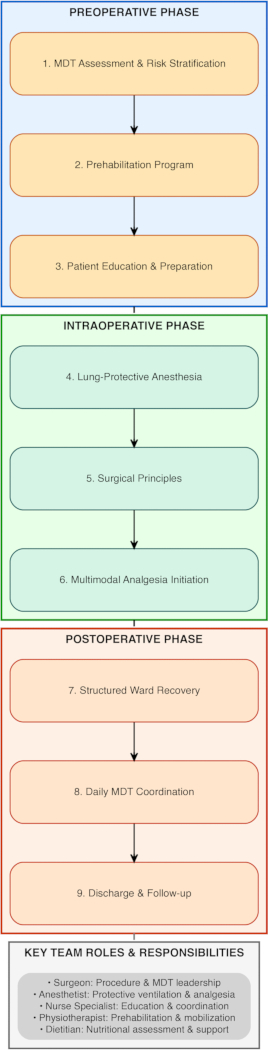
Rycina 1: Schematyczny przegląd protokołu wielodyscyplinarnego postępowania w okresie okołooperacyjnym. Diagram przedstawia trójfazową ścieżkę (przedoperacyjną, śródoperacyjną i pooperacyjną) wraz z kluczowymi interwencjami i rolami odpowiedzialnych członków zespołu. Aby wyświetlić powiększoną wersję tej ryciny, kliknij tutaj.
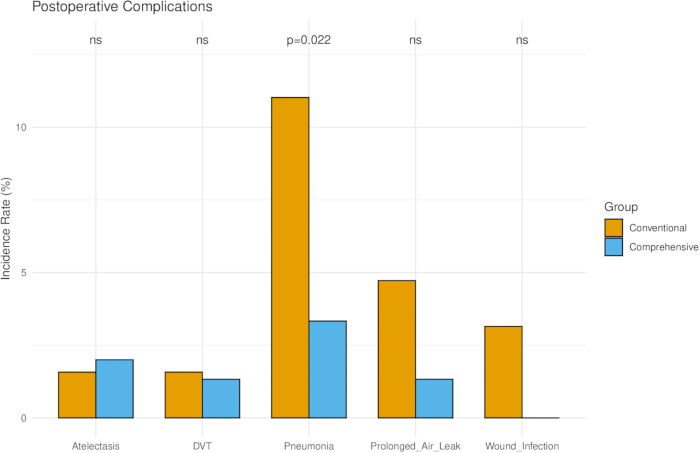
Rysunek 2: Porównanie powikłań pooperacyjnych pomiędzy grupami. Wykres słupkowy przedstawiający częstość występowania głównych powikłań pooperacyjnych w grupach opieki kompleksowej oraz konwencjonalnej. Każda kategoria powikłań została opatrzona odpowiednią istotnością statystyczną (wartość P lub „ns” dla porównań nieistotnych), wyznaczoną na podstawie końcowego, zweryfikowanego zbioru danych. Kliknij tutaj, aby wyświetlić powiększoną wersję tego rysunku.
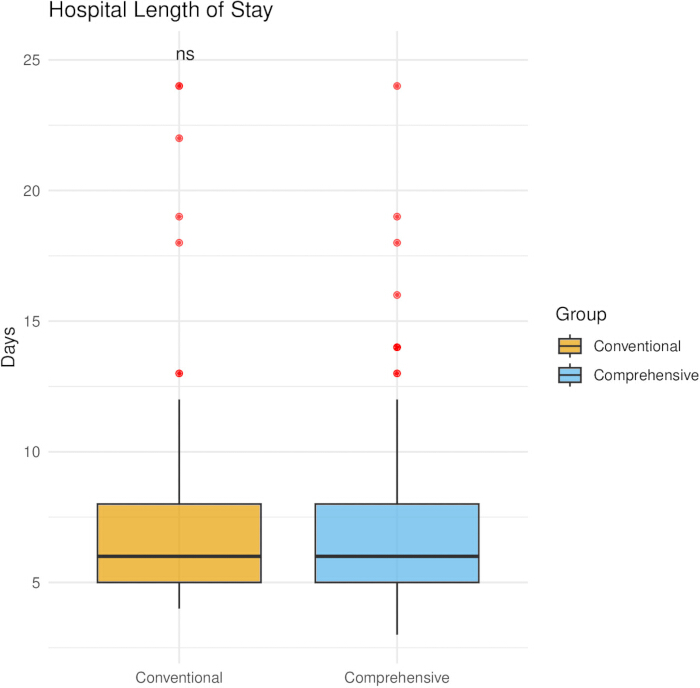
Rycina 3: Rozkład czasu pobytu w szpitalu po operacji. Wykres pudełkowy ilustrujący porównywalny czas pobytu w szpitalu po operacji w grupie opieki kompleksowej (7,16 ± 3,32 dnia) oraz w grupie opieki konwencjonalnej (7,02 ± 3,66 dnia, P = 0,731, oznaczone jako „ns”). Czerwone okrągłe znaczniki wskazują statystyczne wartości odstające wykraczające poza rozstęp międzykwartylny (IQR). Prosimy kliknąć tutaj, aby wyświetlić powiększoną wersję tej ryciny.
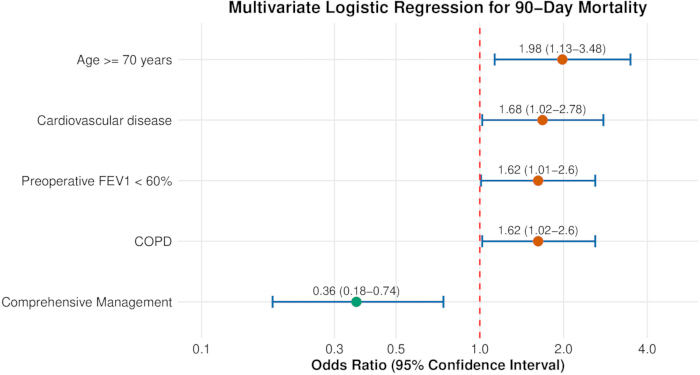
Rycina 4: Analiza wielowymiarowa czynników związanych z 90-dniową śmiertelnością. Wykres leśny (forest plot) przedstawiający ilorazy szans (OR) i 95% przedziały ufności (CI) z analizy wielowymiarowej regresji logistycznej dla 90-dniowej śmiertelności. Pionowa linia przy OR = 1.0 oznacza brak efektu, a dokładne niezależne oszacowania ryzyka/czynników ochronnych są wyświetlane obok każdego istotnego predyktora. Kliknij tutaj, aby wyświetlić powiększoną wersję tej ryciny.
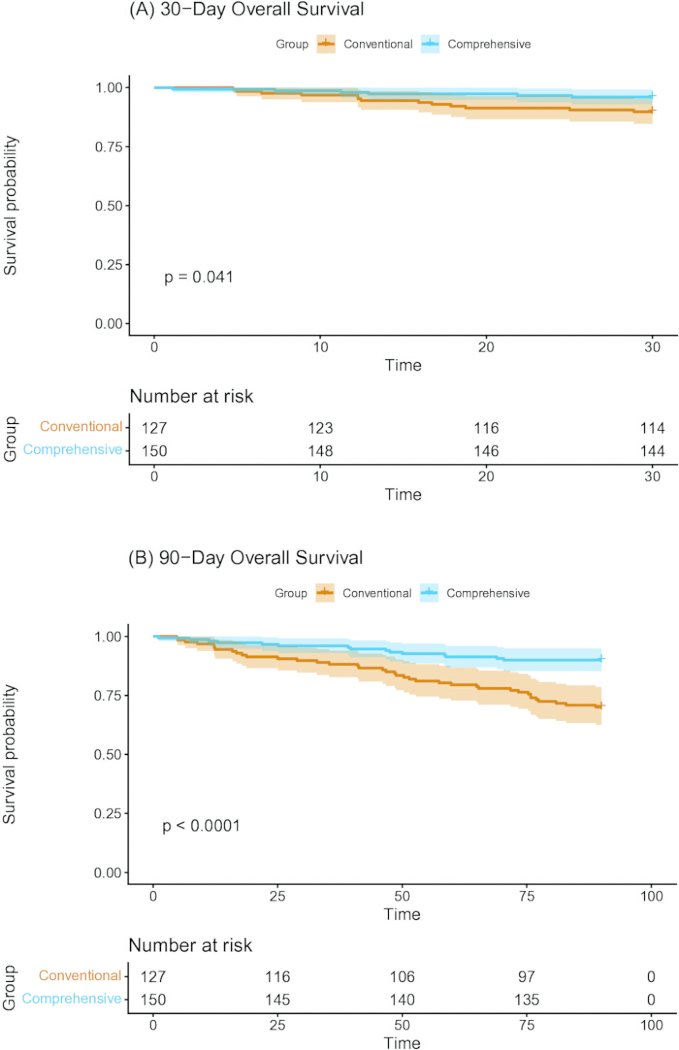
Rysunek 5: Analiza przeżycia całkowitego metodą Kaplana-Meiera w ramach krótkoterminowej obserwacji. (A) Krzywe przeżycia całkowitego w ciągu 30 dni, porównujące pooperacyjne prawdopodobieństwa przeżycia między grupą prowadzoną kompleksowo a grupą z opieką konwencjonalną. (B) Krzywe przeżycia całkowitego w ciągu 90 dni, porównujące przeżywalność podłużną między obiema kohortami. Oba panele zawierają zacieniowane pasma 95% przedziału ufności oraz odpowiadające im tabele liczby osób narażonych na ryzyko, umieszczone poniżej osi czasu. Kliknij tutaj, aby zobaczyć powiększoną wersję tego rysunku.
| Zmienna | Konwencjonalna (n=127) | Kompleksowa (n=150) | Wartość p |
| Wiek (średnia ± SD) | 54,06 ± 13,60 | 56,04 ± 12,80 | 0,214 |
| Płeć, n (%) | 0,467 | ||
| Kobieta | 85 (66,9) | 93 (62,0) | |
| Mężczyzna | 42 (33,1) | 57 (38,0) | |
| BMI, n (%) | 0,381 | ||
| < 25 kg/m² | 87 (68,5) | 111 (74,0) | |
| ≥ 25 kg/m² | 40 (31,5) | 39 (26,0) | |
| Wywiad palenia tytoniu, n (%) | 0,237 | ||
| Nie | 52 (40,9) | 50 (33,3) | |
| Tak | 75 (59,1) | 100 (66,7) | |
| Choroba współistniejąca: POChP, n (%) | 0,916 | ||
| Nie | 104 (81,9) | 121 (80,7) | |
| Tak | 23 (18,1) | 29 (19,3) | |
| Choroba współistniejąca: CVD, n (%) | 0,69 | ||
| Nie | 100 (78,7) | 114 (76,0) | |
| Tak | 27 (21,3) | 36 (24,0) | |
| Stopień zaawansowania guza, n (%) | 0,346 | ||
| Stopień I–II | 63 (49,6) | 84 (56,0) | |
| Stopień III–IV | 64 (50,4) | 66 (44,0) | |
| Metoda chirurgiczna, n (%) | 0,552 | ||
| Biopsja pod kontrolą TK | 0 (0,0) | 1 (0,7) | |
| Lobektomia VATS | 31 (24,4) | 35 (23,3) | |
| Segmentektomia VATS | 94 (74,0) | 112 (74,7) | |
| EBUS-TBNA | 0 (0,0) | 1 (0,7) | |
| Bronchoskopia | 0 (0,0) | 1 (0,7) | |
| Torakoskopowa resekcja zmiany | 1 (0,8) | 0 (0,0) | |
| Torakoskopowa resekcja klinowa | 1 (0,8) | 0 (0,0) | |
| Wskaźnik ASA, n (%) | 0,135 | ||
| I | 20 (15,7) | 32 (21,3) | |
| II | 82 (64,6) | 79 (52,7) | |
| III | 25 (19,7) | 39 (26,0) | |
| FEV₁% (średnia ± SD) | 70,23 ± 15,11 | 73,11 ± 13,65 | 0,097 |
Tabela 1: Charakterystyka wyjściowa pacjentów z rakiem płuca w momencie przyjęcia (n = 277). Wartości przedstawiono jako średnia ± odchylenie standardowe, mediana (rozstęp międzykwartylowy) lub liczba (%). Wartości P wyznaczono za pomocą testu χ2 lub testu t, zależnie od przypadku. Skróty: VATS = torakoskopia wspomagana wideo; COPD = przewlekła obturacyjna choroba płuc; FEV₁ = natężona objętość wydechowa pierwszosekundowa; ASA = American Society of Anesthesiologists; BMI = wskaźnik masy ciała; CVD = choroby układu sercowo-naczyniowego.
| Zmienna wynikowa | Konwencjonalna (n=127) | Kompleksowe (n=150) | wartość p |
| Zgodność z protokołem | |||
| Ukończenie prehabilitacji, n (%) | 38 (29.9) | 136 (90.7) | <0.001 |
| Ustrukturyzowane wsparcie żywieniowe, n (%) | 19 (15.0) | 69 (46.0) | <0.001 |
| Wentylacja chroniąca płuca, n (%) | 66 (52.0) | 139 (92.7) | <0.001 |
| Wczesna mobilizacja w 1. dobie, n (%) | 47 (37.0) | 133 (88.7) | <0.001 |
| Powikłania pooperacyjne | |||
| Ogólne powikłania, n (%) | 37 (29.1) | 15 (10.0) | <0.001 |
| Zapalenie płuc | 14 (11.0) | 5 (3.3) | 0.022 |
| Atelektaza | 2 (1.6) | 3 (2.0) | 1 |
| Niewydolność oddechowa | 3 (2.4) | 1 (0.7) | 0.501 |
| Zakażenie rany | 4 (3.1) | 0 (0.0) | 0.092 |
| Zakrzepica żył głębokich | 2 (1.6) | 2 (1.3) | 1 |
| Przedłużający się przeciek powietrza | 6 (4.7) | 2 (1.3) | 0.187 |
| Układ moczowy lub pokarmowy | 1 (0.8) | 3 (2.0) | 0.736 |
| Wskaźniki odzysku | |||
| Czas pobytu w szpitalu (dni), średnia ± SD | 7.02 ± 3.66 | 7.16 ± 3.32 | 0.731 |
| Maksymalna ocena bólu w skali NRS (0–10) | 5.17 ± 1.45 | 3.47 ± 1.01 | <0.001 |
| Wskaźnik satysfakcji pacjenta | 83.06 ± 6.13 | 91.82 ± 3.67 | <0.001 |
| Wyniki obserwacji po badaniu | |||
| wskaźnik readmisji w ciągu 30 dni, n (%) | 20 (15.7) | 20 (13.3) | 0.691 |
| śmiertelność w ciągu 30 dni, n (%) | 13 (10.2) | 6 (4.0) | 0.071 |
| śmiertelność po 90 dniach, n (%) | 38 (29.9) | 15 (10.0) | <0.001 |
Tabela 2: Porównanie powikłań pooperacyjnych, efektywności rekonwalescencji i przestrzegania protokołu pomiędzy grupą kompleksowego zarządzania a grupą opieki konwencjonalnej (n = 277). Wartości wyrażono jako liczba (%), z wyjątkiem ciągłych wskaźników rekonwalescencji i jakości (średnia ± SD). Tabela systematycznie zestawia zarówno wskaźniki procesu wdrażania (wskaźniki przestrzegania zasad prehabilitacji, żywienia, wentylacji i wczesnej mobilizacji), jak i kompleksowe wyniki kliniczne. Wartości P uzyskano za pomocą testu chi-kwadrat lub dokładnego testu Fishera dla zmiennych kategorycznych oraz testu t dla zmiennych ciągłych. Powikłania oceniano w ciągu 14 dni po operacji. Wskaźniki bólu reprezentują maksymalne wyniki w numerycznej skali oceny (NRS) zarejestrowane w dniach pooperacyjnych 1–3, a ogólną satysfakcję pacjentów zmierzono za pomocą ustrukturyzowanej 100-punktowej wizualnej skali analogowej (VAS) w momencie wypisu.
| Zmienna | Jednowymiarowy OR (95% CI) | Wartość p | Wielowymiarowy OR (95% CI) | Wartość p |
| POChP | 1.66 (1.06–2.59) | 0.026 | 1.62 (1.02–2.60) | 0.044 |
| Choroby układu krążenia | 1.74 (1.08–2.80) | 0.023 | 1.68 (1.02–2.78) | 0.041 |
| Przedsoperacyjny FEV₁ < 60% | 1.62 (1.01–2.60) | 0.045 | 1.62 (1.01–2.60) | 0.048 |
| Kompleksowe leczenie | 0.45 (0.28–0.72) | <0.001 | 0.36 (0.18–0.74) | 0.005 |
| Wiek ≥ 70 lat | 1.79 (1.03–3.10) | 0.039 | 1.98 (1.13–3.48) | 0.019 |
| Płeć (mężczyzna) | 1.11 (0.59–2.05) | 0.736 | -- | -- |
| BMI ≥ 25 kg/m² | 1.53 (0.80–2.86) | 0.191 | -- | -- |
| Historia palenia | 0.78 (0.43–1.45) | 0.432 | -- | -- |
| Stadium guza (III–IV) | 1.47 (0.81–2.70) | 0.208 | -- | -- |
Tabela 3: Jednowymiarowa i wielowymiarowa analiza regresji logistycznej czynników ryzyka związanych z 90-dniową śmiertelnością u wszystkich pacjentów z rakiem płuca. OR = iloraz szans; CI = przedział ufności; VATS = torakoskopia wspomagana wideowizją; COPD = przewlekła obturacyjna choroba płuc; FEV₁ = natężona objętość wydechowa w 1 s; CVD = choroby układu sercowo-naczyniowego. Do modelowania wielowymiarowego włączono zmienne z P < 0,10 w analizie jednowymiarowej. Wynik = 90-dniowa śmiertelność z wszystkich przyczyn. „--“ oznacza zmienne wykluczone z końcowego modelu wielowymiarowego ze względu na brak niezależnej istotności statystycznej (P ≥ 0,05) podczas etapowej eliminacji wstecznej.
Dyskusja
Loading...
$$\rightleftharpoonup{xx}$$
$$\longleftharp{xx}$$,
$$\longrightharp{xx}$$,
This methodology article presents a structured, multidisciplinary perioperative management protocol for lung cancer resection, detailing its components and implementation workflow. Representative results from applying this protocol in a clinical cohort demonstrate its association with improved postoperative outcomes, including reduced complications, reduced pain, higher patient satisfaction, and improved short-term survival. This discussion interprets these findings within the context of existing evidence, elucidates the protocol's mechanistic rationale, acknowledges its limitations, and outlines directions for future application and research.
Interpretation and integration with existing evidence
The observed reduction in pulmonary complications aligns robustly with literature advocating for integrated care pathways20. The significant decrease in pneumonia incidence (3.3% vs. 11.0%) corroborates established evidence that structured preoperative breathing exercises and physical prehabilitation improve postoperative pulmonary function21,22. The mechanism is multifactorial, involving enhanced respiratory muscle strength, improved bronchial hygiene, and reduced atelectasis, all actively promoted by the respiratory care and early mobilization steps within our protocol23. Crucially, the exceptionally high protocol fidelity documented in our cohort, such as the 90.7% compliance rate in prehabilitation, underscores that the clinical benefits of the bundle are tightly bound to systematic execution rather than isolated interventions, addressing the patient's physiologic and psychologic readiness holistically.
Regarding recovery efficiency, the postoperative hospital length of stay was statistically comparable between the two groups (7.16 ± 3.32 days vs. 7.02 ± 3.66 days, P = 0.731). While a primary objective of conventional Enhanced Recovery After Surgery (ERAS) principles is the reduction of hospital stay24, the current findings reveal a critical paradigm shift toward the "quality of recovery." Despite an identical duration of hospitalization, patients in the comprehensive management group experienced a profound clinical advantage, characterized by a substantial reduction in maximal postoperative pain scores (3.47 ± 1.01 vs. 5.17 ± 1.45, P < 0.001) and a significant increase in global satisfaction scores (91.82 ± 3.67 vs. 83.06 ± 6.13, P < 0.001). Importantly, this optimized quality of in-hospital convalescence was achieved without compromising safety, as evidenced by the statistically equivalent 30-day readmission rates between the cohorts (13.3% vs. 15.7%, P = 0.691). This suggests that the standardized, proactive interventions enhance the patient experience and clinical safety during the acute recovery window25.
Most notably, the protocol was identified as an independent protective factor against postoperative mortality (Multivariate OR = 0.36, 95% CI: 0.18–0.74, P = 0.005). The survival advantage was uniquely apparent when extended to the 90-day follow-up period (10.0% vs. 29.9%, P < 0.001), whereas the 30-day mortality difference did not achieve full statistical significance (4.0% vs. 10.2%, P = 0.071). This disparity strongly validates our methodology of incorporating a 90-day survival horizon, demonstrating that traditional 30-day audits overlook late-onset perioperative failures and failure-to-rescue events in thoracic oncology26. The long-term advantage is potentially mediated by reduced initial complication severity, better preserved functional status, and sustained multidisciplinary support during the critical transitional phase.
The success of the protocol can be attributed to the synergistic action of its core components, as detailed in the methodology. Preoperative prehabilitation (steps 1.2–1.4) directly targets modifiable risk factors: pulmonary training optimizes respiratory reserve, nutritional intervention supports immune function and tissue repair27, and psychological preparation improves compliance and reduces stress. Intraoperative lung-protective strategies (step 2.1) mitigate iatrogenic injury. Postoperative structured recovery (steps 3.1–3.2), including proactive pain management and enforced early mobilization, prevents complications like atelectasis and venous thromboembolism28,29,30. Crucially, the protocol's design mandates continuous multidisciplinary coordination (steps 1.1 and step 3.2.1), with nursing professionals playing a pivotal role in execution, monitoring, and ensuring care continuity, which is fundamental to achieving consistent results12,16,31.
The analysis also confirmed known patient-related risk factors for mortality, such as advanced age (≥ 70 years), impaired baseline pulmonary function (FEV₁ < 60%), COPD, and cardiovascular disease. This underscores a key strength of the protocol: its structured yet adaptable framework allows for risk-stratified intensification of care. High-risk patients (e.g., those with advanced age, poor lung function, or comorbidities) may derive the greatest absolute benefit from strict adherence to all protocol elements, suggesting that future implementations can be tailored32. The protocol provides a standardized yet flexible template that can be adopted and adapted by other institutions seeking to systematize perioperative care, addressing the noted gap in standardized models for thoracic surgery18.
While the supporting results are promising, certain limitations must be considered when interpreting the protocol's efficacy and generalizability. The clinical outcomes are derived from a retrospective analysis using a historical control group across a limited number of centers, which may introduce selection bias and limit direct generalizability. Although statistical adjustments were made using multivariable logistic regression, unmeasured confounding factors cannot be entirely excluded. Furthermore, the presented data do not address long-term oncology outcomes such as cancer recurrence, overall survival, or quality of life, which are important for a holistic assessment. Finally, the specific contribution and ideal weighting of each component within the bundled protocol remain unclear; a “component-network” analysis would be a valuable future investigation to optimize the protocol.
Conclusion
In summary, this article provides a detailed methodological blueprint for a comprehensive perioperative management protocol in lung cancer surgery. The accompanying clinical outcome data illustrate its potential to significantly improve key surgical quality metrics, specifically protocol adherence, acute pain mitigation, and 90-day survival, supporting its clinical rationale and validity. The protocol translates evidence-based principles into a concrete, actionable clinical pathway. Future work should focus on prospective, multicenter randomized validation of this protocol, formal cost-effectiveness analyses, and research into tailoring specific interventions for high-risk patient subgroups to further enhance the quality and personalization of thoracic surgical care.
Oświadczenia
Loading...
$$\rightleftharpoonup{xx}$$
$$\longleftharp{xx}$$,
$$\longrightharp{xx}$$,
The authors declare that there are no conflicts of interest in this study.
Podziękowania
Loading...
$$\rightleftharpoonup{xx}$$
$$\longleftharp{xx}$$,
$$\longrightharp{xx}$$,
This work was supported by the Kunshan Municipal Science and Technology Special Project (Grant No. KS2213) and the Suzhou Science and Technology Development Plan (Grant No. SKY2023031). We want to express our gratitude to the nurses in the department for their help with the project. All authors have read and agreed to the final version of the paper.
Materiały
| Nazwa | Firma | Numer katalogowy | Komentarze |
|---|---|---|---|
| Argyle Small-Bore Thoracic Catheter | Cardinal Health | 8888571200 | Straight single-use polyvinyl chloride chest tube (20-24 Fr) for optimized pleural drainage following VATS. |
| Celecoxib Capsules | Pfizer | https://www.pfizer.com | Baseline scheduled selective COX-2 inhibitor oral analgesic administered postoperatively (200 mg q12h). |
| da Vinci Xi Surgical System | Intuitive Surgical | IS4000 | Advanced robotic surgical system utilized for minimally invasive anatomical lung resections. |
| Endo GIA Ultra Universal Stapler and Reloads | Medtronic | EGIAUSTND | Endoscopic linear cutting staplers utilized for secure division of pulmonary vessels, bronchi, and fissures. |
| GraphPad Prism | GraphPad Software | https://www.graphpad.com/ | Statistical graphing software used for generating postoperative complication distribution bar charts. |
| High-End Anesthesia Workstation Primus | Draeger Medical | System Configuration | Advanced anesthesia platform for administering intraoperative lung-protective ventilation parameters during one-lung ventilation. |
| High-Protein Oral Nutritional Supplement | Nutricia | https://www.nutricia.com | High-protein oral formula prescribed for nutritionally at-risk patients (PG-SGA score $\ge$ 4) prior to resection. |
| Hospital Anxiety and Depression Scale | Western Psychological Services | https://www.wpspublish.com | Clinical psychometric questionnaire administered by the nurse specialist for preoperative psychological risk screening. |
| Numeric Rating Scale Assessment Tool | Standard Clinical Form | Clinical Standard Scale | 10-point scale utilized every 4 hours for dynamic postoperative pain monitoring and targeted rescue analgesia titration. |
| Paracetamol Injection | Local Pharmaceutical Provider | Standard Pharmaceutical | Core component of the non-opioid multimodal analgesia regimen (1g IV/PO q6h). |
| PASS Power Analysis Software | NCSS, LLC | https://www.ncss.com/software/pass/ | Power analysis and sample size software utilized during the initial study design phase. |
| Patient-Controlled Analgesia Pump | Baxter | 7130P | Infusion pump system for delivering postoperative continuous regional or systemic analgesia. |
| Preoperative Carbohydrate Loading Drink | Local Clinical Provider | Clinical Nutrition Protocol | Clear 12.5% carbohydrate drink administered as a 400 mL oral dose 2 hours prior to anesthesia induction. |
| R Software | R Foundation for Statistical Computing | https://www.r-project.org/ | Statistical programming environment used for data baseline balancing, multivariable regression, and survival analysis. |
| SPSS Statistics | IBM | https://www.ibm.com/spss | Statistical software utilized for baseline population clinical characteristics description and univariate filtering. |
| Thopaz+ Digital Chest Drainage and Monitoring System | Medela AG | 77 | Electronic digital chest drainage system providing continuous objective air leak tracking (mL/min) to accelerate tube removal. |
| Thoracic Epidural Analgesia Catheter Kit | Arrow International | AR-05500 | Epidural catheter kit used for continuous intraoperative and postoperative regional analgesia delivery. |
| VATS Endoscopic Camera and Tower System | Karl Storz | IMAGE1 S | High-definition thoracoscopic visualization stack utilized for standard video-assisted thoracic surgery approaches. |
| Volumetric Incentive Spirometer Voldyne 5000 | Teleflex | 175502 | Volumetric breathing training device utilized for supervised preoperative and postoperative pulmonary rehabilitation. |
Przedruki i uprawnienia
Poproś o pozwolenie na ponowne wykorzystanie tekstu lub ilustracji tego artykułu JoVE
Poproś o pozwolenie