Guest Editors

Charlotte Zajc
Medical University of Vienna, Department for Transfusion Medicine and Cell Therapy
<p>Charlotte Zajc heads the research group for preclinical studies on cellular therapies at the Medical University of Vienna, Department of Transfusion Medicine and Cell Therapy. She completed her PhD at the Children's Cancer Research Institute in 2020 and spent six months as a visiting researcher at the Standford School of Medicine. After her postdoctoral studies at the BOKU University in Vienna, she joined the Medical University of Vienna in 2024 as a principal investigator. Her research focuses on CAR T cell engineering, including mechanistic analysis of basic CAR T cell functions and optimization of CAR designs by combining immunological methods with protein engineering.</p>

Maik Luu
University Hospital Würzburg, Medical Clinic and Polyclinic II, Chair for Cellular Immunotherapy
<p><span style="color: rgb(34, 34, 34);">Dr. Maik Luu, PhD, is a tenure-track assistant professor at the University Hospital Würzburg, specialized in investigating the interaction between microbiome-derived metabolites and cellular immunotherapy. He earned his PhD degree in T cell immunology in 2019 from Philipps-University Marburg, focusing on the impact of the microbiome on autoimmunity and inflammation. During his postdoc, Dr. Luu has investigated mechanisms of mucosal homeostasis and strategies to improve T cell-mediated cancer immunotherapy. His lab primarily focuses on synergizing microbial postbiotics and CAR T cell engineering to improve cellular therapy for malignant and non-malignant diseases.</span></p><p><br></p><p><span style="color: rgb(34, 34, 34);">Dr. Luu has published extensively in leading journals and has received several honor,s such as the EBMT/EHA Emerging Investigator Award and the Bright Spark Research Award by the American Association of Immunology. Dr. Luu is an appointed member of the Young Academy at the Bavarian Academy of Sciences and scientific project manager of the EU IMI consortium T2EVOLVE.</span></p>
Collection Overview
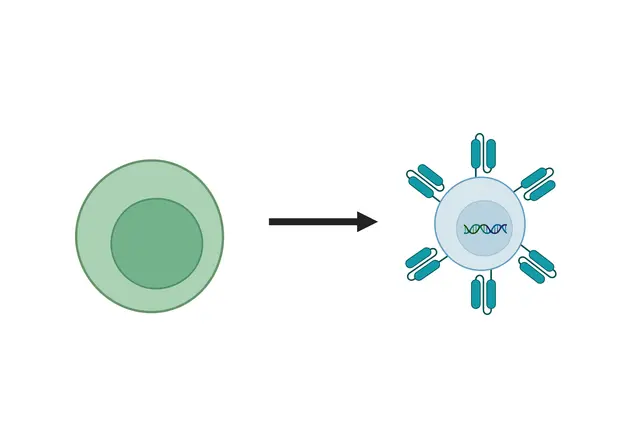
The emergence of engineered cellular therapies has transformed cancer treatment, particularly with the success of chimeric antigen receptor (CAR) T cell therapies in hematologic cancers. The field is rapidly evolving, leading to the development of more advanced combinatorial therapies designed to address both hematologic malignancies and solid tumors. Current research focuses on enhancing the safety, specificity, and persistence of engineered immune cells to further advance these therapies.
In addition to CAR T cell therapies, other cell-based or cell-targeting treatments, such as T cell receptor (TCR)-based therapies, antibody therapies, and immune checkpoint blockade, are being integrated into the wider landscape of cellular immunotherapy. This integration provides complementary and synergistic strategies for targeting cancer.
This Method Collection highlights cutting-edge techniques, protocols, and strategies for developing, modifying, and evaluating cellular immunotherapies. It aims to serve as a comprehensive resource for researchers engaged in the genetic engineering of immune cells, the generation and optimization of CAR designs, manufacturing processes, functional assays, T cell isolation and culture, as well as in vitro cultures.
Furthermore, the collection will explore combinatorial approaches that enhance therapeutic outcomes, including the combination of CAR T cells with immune checkpoint inhibitors, bispecific T cell engagers or antibodies, and emerging technologies such as CRISPR-based screening and gene editing, protein engineering, and synthetic biology.
Articles
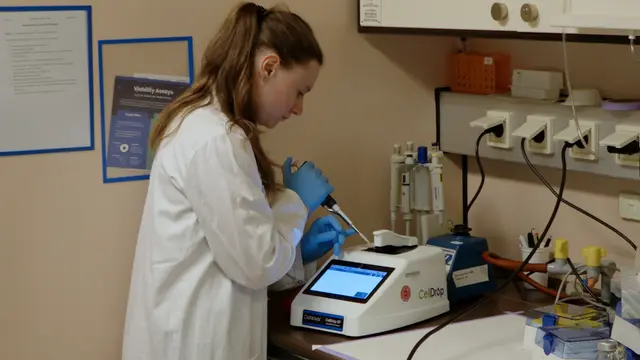
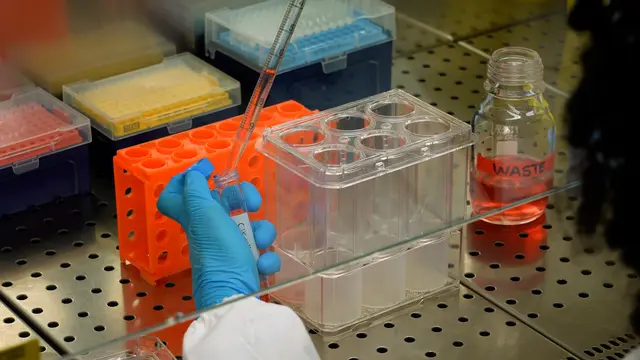
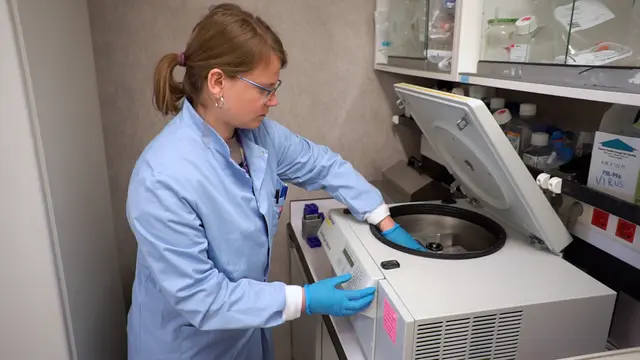
Improving CRISPR-Cas9 Screens in CAR T Cells: A Refined Method for Library Preparation
0 Views
•
2026
•
Maider Garnica*1, Patxi San Martin-Uriz*1,2, Paula Rodriguez-Marquez1,2, Maria E. Calleja-Cervantes1,3, Saray Rodriguez-Diaz1, Rebeca Martinez-Turrillas1,2, Mikel Hernaez2,3,4,5, Felipe Prosper1,2,4,6, Juan R. Rodriguez-Madoz1,2,4
1Hemato-Oncology Program, Cima Universidad de Navarra, IdiSNA, 2Centro de Investigacion Biomedica en Red de Cancer (CIBERONC), 3Computational Biology and Translational Genomics Program, Cima Universidad de Navarra, IdiSNA, 4Cancer Center Clinica Universidad de Navarra (CCUN), 5Data Science and Artificial Intelligence Institute (DATAI), Universidad de Navarra, 6Hematology and Cell Therapy Department, Clinica Universidad de Navarra, IdiSNA
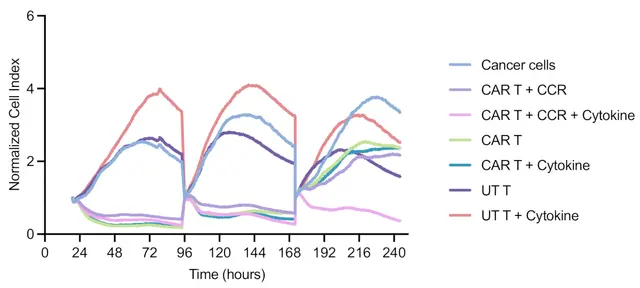
Serial Killing Assay Using Longitudinal Impedance-Based Tumor Cell Viability Measurement - A Useful Method to Assess T Cell Performance
0 Views
•
2025
•
Tengis Tschaidse1,2, Marcel P. Trefny1, Emanuele Carlini1, David Andreu-Sanz1, Stefanos Michaelides1, Ngoc Thien Thu Nguyen1,3, Sebastian Kobold1,3,4,5
1Division of Clinical Pharmacology, LMU University Hospital, 2Department of General, Visceral and Transplantation Surgery, LMU University Hospital, 3German Cancer Consortium (DKTK), Partner Site Munich, a partnership between the DKFZ and the University Hospital of the LMU, 4German Center for Lung Research (DZL), 5Einheit für Klinische Pharmakologie (EKLiP), Helmholtz Zentrum München - German Research Center for Environmental Health Neuherberg


Abstracts
Measuring kinetics of activation and deactivation of drug-regulated CAR T cells
Elise Sylvander*1,
Dominik Emminger2,
Michael Traxlmayr1
1Institute of Biochemistry, BOKU University, Vienna, Austria,
2St. Anna Children’s Cancer Research Institute, CCRI, Vienna, Austria